
Tractian keeps asset-heavy operations running. Multimodal sensors and AI models give industrial teams a live view of asset health, so they can act before failure becomes downtime.
Mission
Keep the world’s most critical infrastructure running.
Almost everything people rely on was made, moved, stored, cooled, pumped, or powered by a machine. When critical equipment fails without warning, production stops, costs rise, and the effects move far beyond the plant.
Tractian catches those issues early. The goal is simple: keep the machines behind medicine, food, energy, data, transportation, and industrial production running as expected.
When Tractian does its job well, the result can look uneventful: the line keeps moving, the order ships on time, the shift ends as planned, and teams spend their time on planned work instead of chasing breakdowns.
Operational outcomes
Keep the machines your operation depends on running.
Detect deterioration early and reduce unplanned downtime on the assets production cannot run without.See asset risk clearly across the operation.
Bring mechanical, electrical, and operational signals into one view of asset health, so teams know what needs attention first.Plan maintenance instead of reacting to breakdowns.
Reduce emergency repairs, rush-shipped parts, overtime, and unnecessary interventions by acting before failures escalate.Metrics
Reported by customers on the platform in 2025.
Industries
- Manufacturing
- Automotive
- Chemical
- Pharmaceutical
- Food & Beverage
- Mills & Agriculture
- Mining & Metals
- Data Centers
- Energy & Water
- Oil & Gas
- Government & Defense
- Logistics
- Rail & Transit
Recognition
 Forbes AI 50, 2026
 #24, 2025 Deloitte Technology Fast 500 in North America
 #269, 2026 Inc. 5000
Leadership
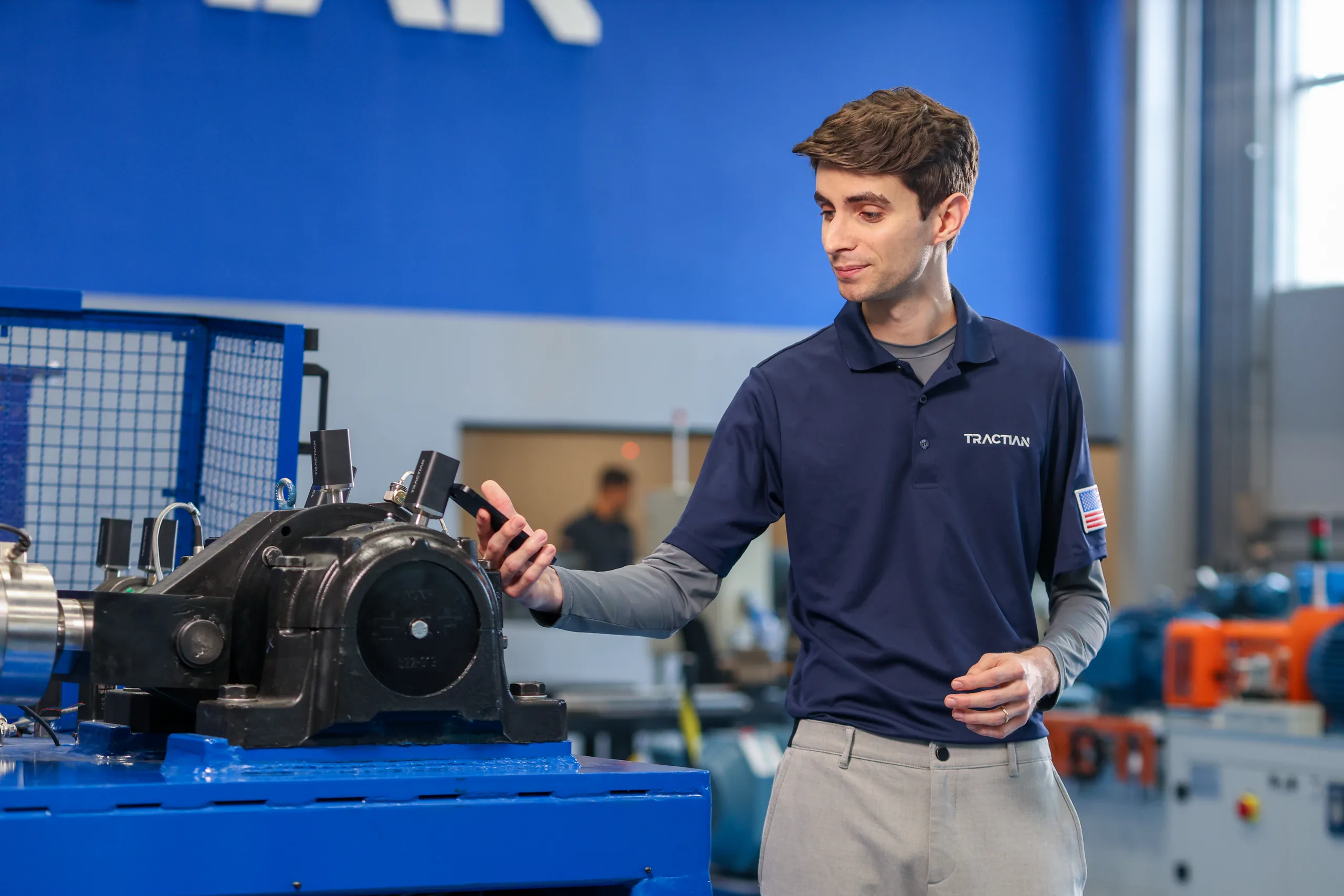
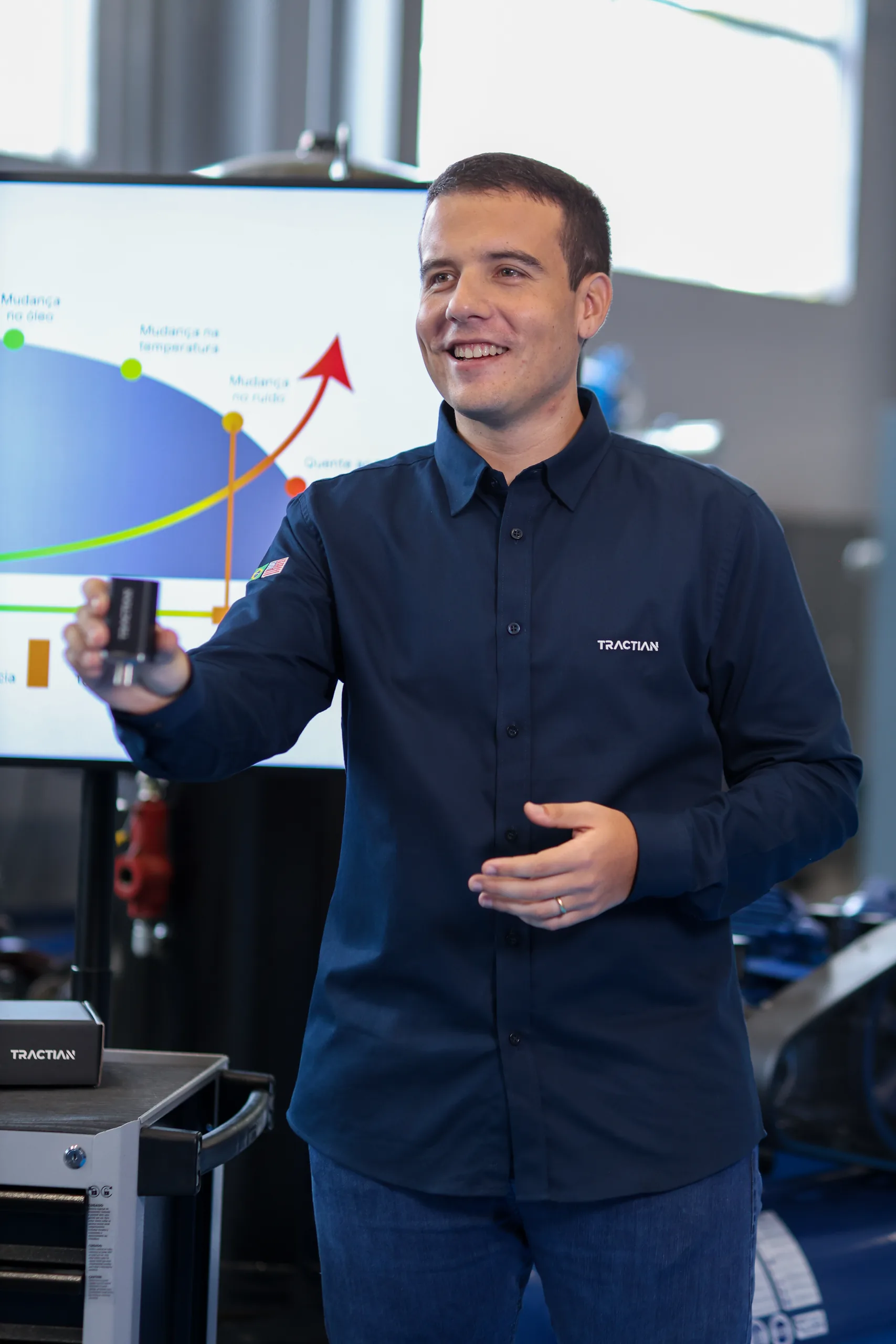
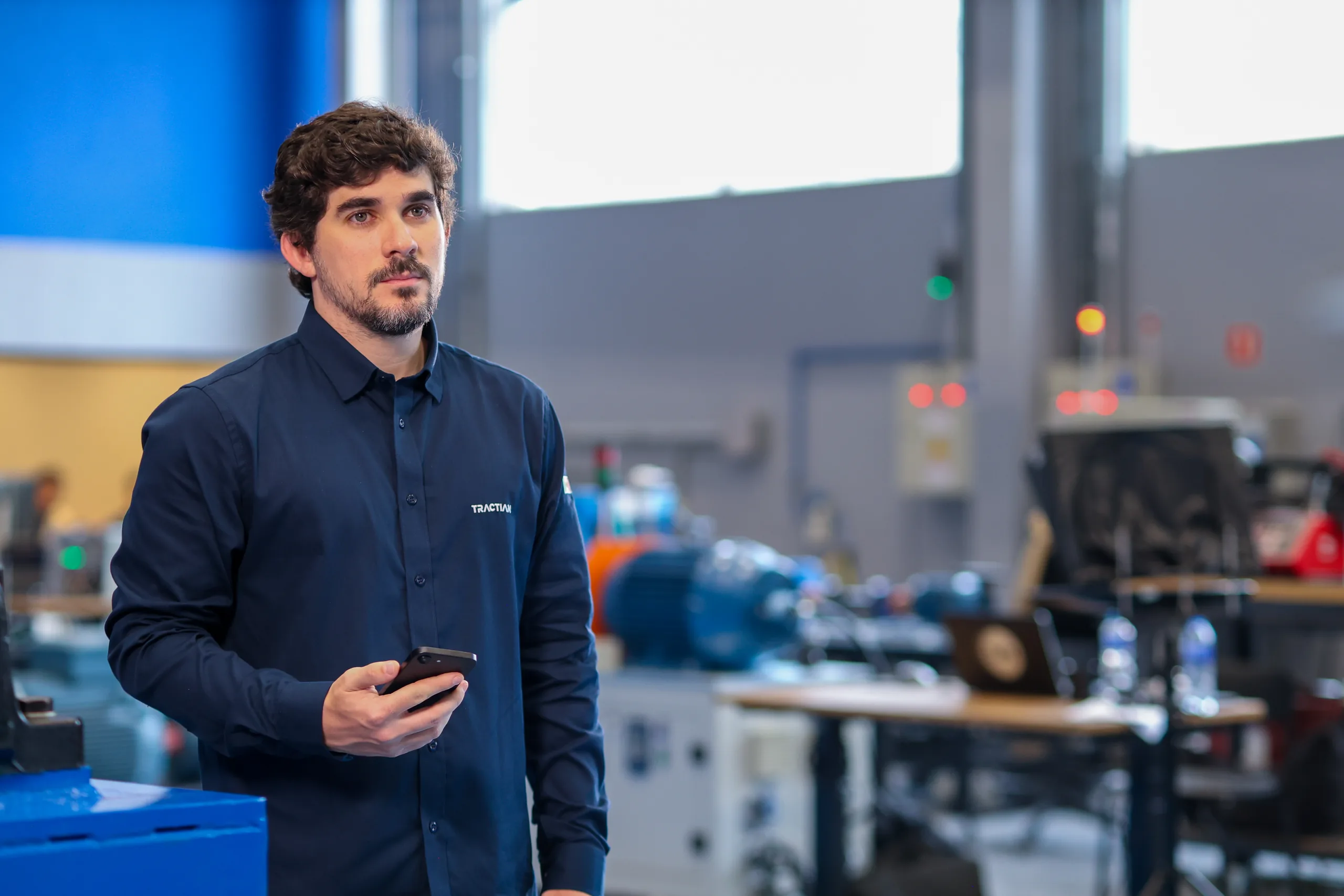
Investors
In 2026, Tractian raised $130 million at a $1.4 billion valuation. Sapphire Ventures led the Series D, with M&G’s Catalyst as co-lead. N47, General Catalyst, Bosch Ventures, The Pritzker Organization, Monashees, and Y Combinator also participated.
The round also marked Y Combinator's first additional investment in Tractian since the company participated in its Winter 2021 batch.
Locations
Atlanta, Georgia, United States
Monterrey
São Paulo
Poland
100,000-square-foot AI Center in São Paulo, Brazil
FAQ
What does Tractian do?
Tractian is the asset health company for asset-heavy industries. Instead of watching one component or signal in isolation, Tractian reads the mechanical, electrical, and operational layers of a critical asset together. Sensors perceive how the machine is running, AI models turn those signals into one picture of its condition, and the platform returns a diagnosis, probable root cause, and recommended action. The result is one clear view of asset health, so teams can act before failure becomes downtime.
What is Physical AI?
Physical AI is intelligence applied to the physical world. It perceives real machines through sensors, interprets what it finds using models trained on real-world failure data, and turns that understanding into an action. Tractian applies Physical AI to the critical machines asset-heavy industries depend on.
How is Tractian different from predictive maintenance tools?
Many condition-monitoring tools look at one signal or one component at a time. Tractian combines multiple modalities across the mechanical, electrical, and operational layers of an asset, creating a more complete picture of its health. The platform connects the signal to the failure mode, likely root cause, and recommended action so teams do not have to stop at detection.
What results do customers see?
Customers use Tractian to reduce unplanned downtime, avoid emergency maintenance, and get more productive hours from the assets they already own. A Verdantix Verified Value Delivery study commissioned by Tractian modeled a $200M manufacturer and found a 401% three-year ROI, an eight-month break-even, and approximately $5.14M in three-year benefits.
How does Tractian train its AI?
Inside a 100,000-square-foot AI Center in São Paulo, Tractian runs the same types of machines it monitors in the field, intentionally taking them through real failure conditions. Those experiments help train and validate models against physical machine behavior rather than relying only on generic datasets.